
Client work · eCommerce SEO

The Store Everyone Could Find, But Nobody Could Buy From
A gaming and computer hardware retailer had traffic. What it didn’t have was traffic that converted, rankings that held, or a site Google actually trusted. Twelve months later, none of that was true anymore.
Picture the kind of store that looks fine from the outside. Product pages load. Categories exist. Someone, at some point, filled in the meta titles. And yet month after month, the traffic stayed flat, rankings sat stuck in the middle of page one, and sales from organic search barely moved the needle.
That’s not a broken store. That’s a store quietly leaking its own potential, one uncrawled page and one missed keyword at a time. And it’s a far more common problem than most ecommerce brands realize, because nothing about it looks like an emergency until you actually measure it.
The site wasn't failing. It was invisible in all the ways that actually matter, and invisible doesn't send an alert.
01
What we found when we opened the hood
Before touching a single page, we ran a full technical audit: crawl behavior, indexation gaps, site architecture, the works. What we found was a familiar pattern for growing ecommerce stores. Redirect chains quietly eating crawl budget. Category pages structured for the catalog system, not for how a real shopper searches. Product pages ranking, if they ranked at all, for the wrong intent entirely.
None of it was catastrophic on its own. Together, it was a ceiling the site couldn’t climb past no matter how much content got added on top.
02
The fix, in the order that actually moves numbers
We didn’t start with content. We started with what Google could even see.
- Fixed crawl errors, redirect chains, and structural issues surfaced in the technical audit
- Rebuilt keyword targeting around commercial and transactional search intent, not vanity terms
- Rewrote meta titles, meta descriptions, and heading structure across priority page types
- Restructured category and collection pages to match how shoppers actually search and compare
- Strengthened internal linking and page hierarchy so authority flowed to the pages built to sell
- Tracked rankings and search performance monthly in GSC and GA4, adjusting as the data came in
The detail that mattered most
Every optimization targeted commercial and category pages first. Not blog content. Not resource pages. The pages where a click turns into a cart.
03
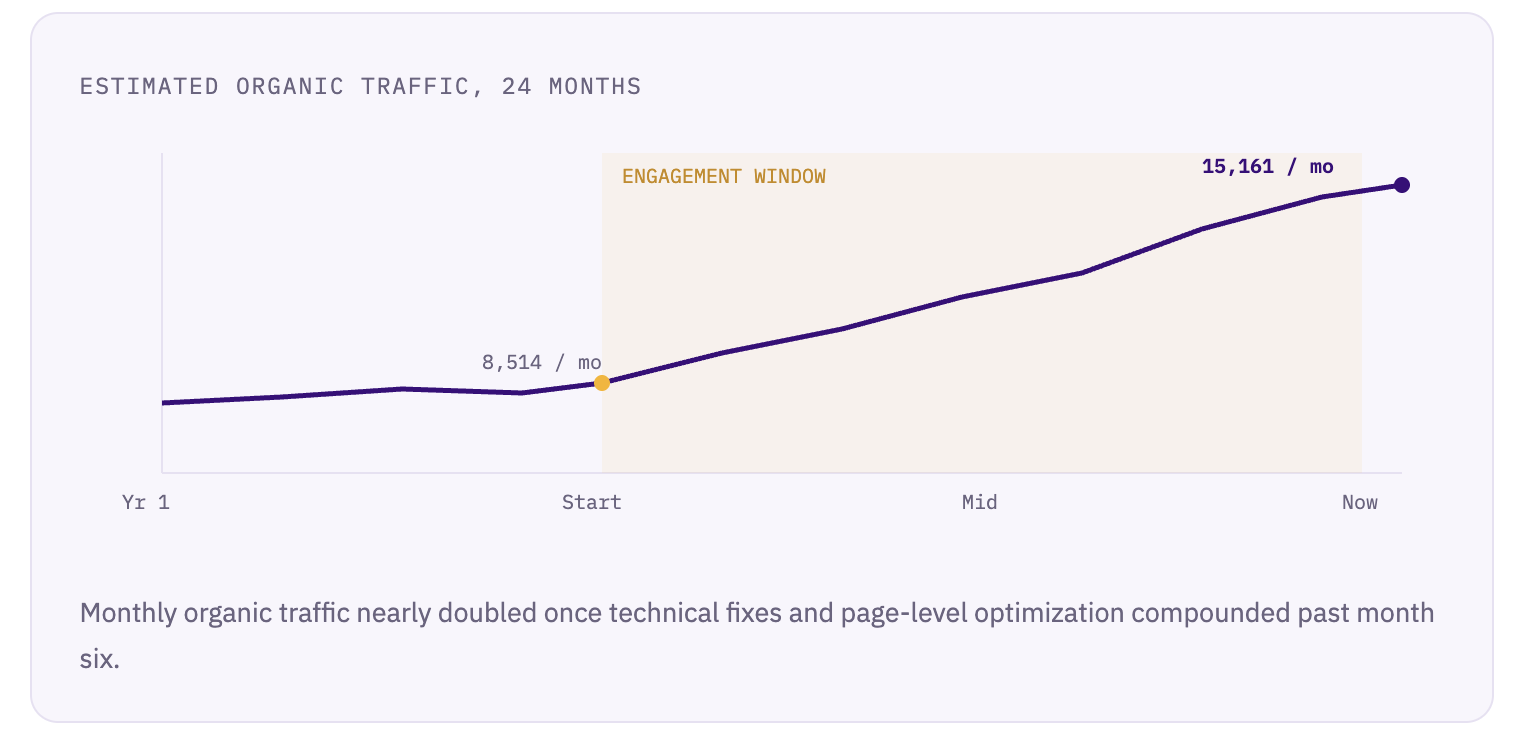
What the graph actually looked like
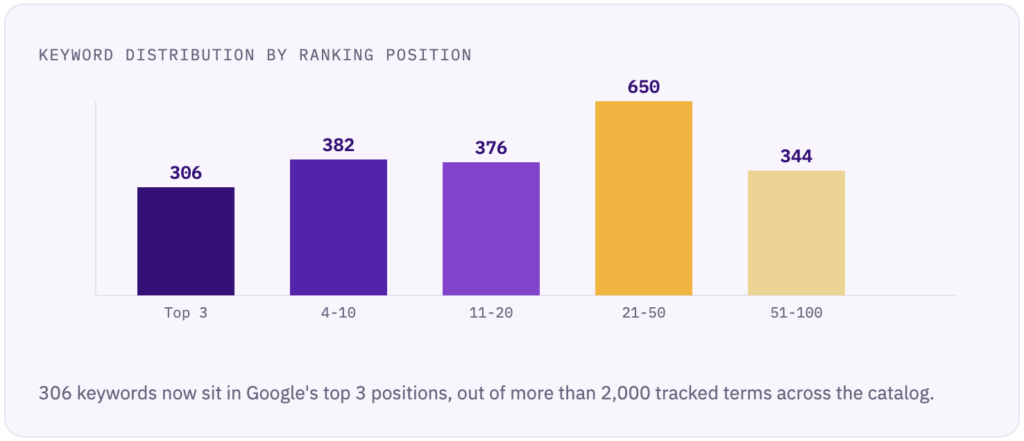
Traffic didn’t spike and fade the way paid campaigns do. It climbed, slowly at first, then compounding as more pages crossed into ranking territory.
04
The numbers that actually mattered to the business
Rankings are a proxy. Traffic is a proxy. What the client actually cared about was whether any of this turned into revenue, and it did, decisively.
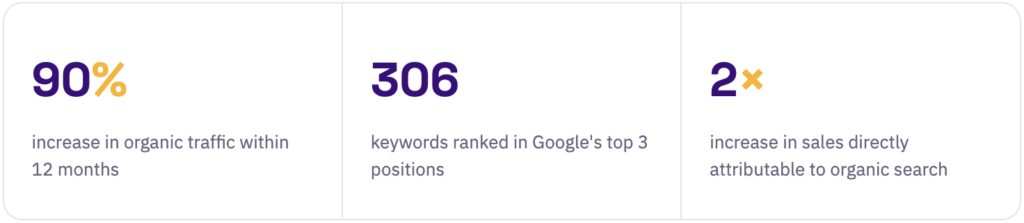
Every gain came from commercial category and product pages, not blog or resource content, which means the traffic increase and the sales increase moved together instead of drifting apart.
05
Around the same time, a Shopify store in the supplements space came to us with a different problem: not a visibility issue, a trust issue. Search engines couldn’t reliably crawl or index half the catalog, and duplicate content was quietly working against every page trying to rank.

Different platform, different category, same underlying discipline: audit first, fix the foundation, then optimize on top of something search engines can actually trust.
05
The process behind both
Neither result came from a single clever trick. Both came from the same seven-step process, run with enough discipline that the results were repeatable instead of being lucky.
- Discovery & audit, competitor analysis, technical crawl, GA4 and GSC baseline
- Keyword strategy, commercial intent mapping, priority page identification
- Technical fixes, crawl resolution, site structure, Core Web Vitals
- On-page optimization, metadata, headings, internal linking, category structure
- Content & authority, gap analysis and relevance improvements
- Backlinks, contextual, niche-relevant outreach
- Monitoring & reporting, monthly reviews, continuous refinement
The lesson underneath both engagements is the same one we keep coming back to. Traffic without structure is a leak waiting to happen. Fix the structure first, and the traffic you already deserve stops disappearing before it ever reaches the cart.